


What a great company had to move car from New Jersey to Florida was skeptical about some other quotes that I received. This was no nonsense delivered the car early and for the price that they told me.
Richard Durgin
October 28, 2026



Updated November 2026
Ship your car from New York to California in an estimated 6–10 days after pickup. Get your shipping price instantly.
Don’t Drive It. Haulify It.
Shipping a car from New York to California involves approximately 2,630 to 2,835 miles across representative city pairs, with an estimated 6–10 days in transit after pickup. Whether your vehicle is departing New York City, Buffalo, Rochester, or Albany, the distance and transportation arrangements depend on its California destination, including Los Angeles, San Francisco, San Diego, and Sacramento.
This westbound route connects New York's metropolitan and Upstate transportation networks with California's coastal and inland markets. Pickup in New York City may require coordination around commercial truck restrictions, while Upstate origins connect with different interstate corridors. In California, deliveries to the Bay Area, Central Valley, and Southern California each involve distinct geography and access requirements. Explore our New York car shipping and California car shipping guides for broader statewide transportation information.
New York-to-California vehicle transportation covers a considerable distance, but the exact cities involved determine the final mileage and transportation requirements.
New York pickup geography: New York City, Long Island, and the Hudson Valley involve different highway connections and pickup conditions than Buffalo, Rochester, Syracuse, or Albany. More remote origins in northern New York may require additional carrier positioning.
California delivery geography: Los Angeles and San Diego require different final approaches than San Francisco, Sacramento, or cities in the Central Valley. Deliveries to mountain communities, remote coastal areas, or locations far from major highways may involve additional mileage.
The customer's actual pickup and delivery ZIP codes are essential for calculating the applicable distance and determining a shipment-specific price.
Use Haulify’s car shipping cost calculator to estimate your shipment using your actual locations and vehicle.
Vehicle dimensions, weight, operating condition, and transportation method influence shipping costs on this coast-to-coast route.
Open auto transport is a practical option for everyday sedans, SUVs, and pickup trucks. Vehicles travel on an open trailer and remain exposed to ordinary weather and road conditions during transportation.
Enclosed auto transport provides additional shielding from weather and road debris. Customers transporting classic, restored, luxury, exotic, or other specialty vehicles may prefer this option.
Low ground clearance, oversized dimensions, modifications, or an inoperable condition can require different loading equipment or transportation arrangements. These details should be provided accurately when requesting a quote.
Learn more about enclosed auto transport when comparing protection options.
Vehicle size and operating condition can affect trailer space, equipment needs, and the quote. The examples assume a standard sedan. Larger or heavier vehicles use different trailer space, and a vehicle that does not run may need different loading arrangements. Provide the make, model, modifications, and operating condition so the quote can be evaluated correctly.
Cross-country transportation between New York and California can involve changing weather conditions, available carrier capacity, and scheduling requirements.
Seasonal conditions: Winter weather in New York and along northern interstate corridors can affect pickup or carrier routing. Western mountain conditions may also influence transportation, depending on the carrier's itinerary.
Scheduling considerations: Customers arranging a household relocation, university move, or job transfer may need to coordinate vehicle pickup with flights, moving services, and California housing arrangements.
A wider vehicle-availability window can provide additional scheduling options. Actual pricing depends on carrier availability and shipment requirements rather than a guaranteed seasonal pattern.
What a great company had to move car from New Jersey to Florida was skeptical about some other quotes that I received. This was no nonsense delivered the car early and for the price that they told me.
Pick this company if you want your car transported correctly and for the price they quoted for! Awesome driver and company, got my car picked up on schedule and dropped off on schedule, will definitely be using again for all my car transport needs !
There was clear and concise communication throughout the shipping process. I appreciated working with Haulify and Darius because the quote given did not change and the driver assignment was quick, on time and easy. I recommend this company above others. (I have shipped my car several times to other states using different services.) My experience has never been this seamless so I will be using Haulify again!
Great communication. I felt secure as they transported my car, I truly feel confident in them. I recommend using this company, the quoted price doesn’t change and they work with you within the outlined timeframe.
We had to have three cars hauled with a little bit of a short notice on scheduling but Darius got us sorted out for a fair cost, without any problems, and our cars showed up just how they left and when they said they would. I never shipped a car before and the process with Haulify and the skilled assistance of Darius made it pretty easy. I would definitely use Haulify again.
I highly recommend them! They're excellent, and I'll never work with any other company again. They fully deserve what they charge.
Awesome service and transparent. I appreciate the prompt response
Excellent communication!
True Professionals here, they gave me a price and a timeline and stuck to it...It's very rare these days with these type of services...I'd use Haulify again in a second and recommend them to anyone considering moving their vehicles.
Fast service
I am a repeat customer of Haulify and cannot recommend them highly enough!!! Both times I used Haulify to transport my vehicles cross country, and both times I was so impressed. Not only was the process timely (and both times my vehicle arrived precisely on time), but the communication throughout the process was impeccable. I will never use another company to transport my vehicles ever again, and I look forward to giving Haulify my business in the future when the need arises. Hands down the best out there!
Haulify was unreal from start to finish. I shipped a vehicle from San Diego to Chicago, and the entire process was smooth, transparent, and stress-free. Their communication was top-tier — constant updates, quick responses, and zero guesswork at any point. They did exactly what they said they would do, when they said they'd do it, which is rare in vehicle transport. Pickup and delivery were on time, the car arrived in perfect condition, and the execution overall was extremely professional. You can tell they actually care about doing things the right way, not just moving cars. If you're looking for a company that combines excellent communication, reliability, and flawless execution, Haulify is it.
I give haulify an A+. They were awesome to work with and everything went very smoothly. Very good communication. I'd recommend them in a heartbeat
Thank you so much Darius was s amazing with helping me process everything, replied to every call or text and. Kept me informed I have received my truck just yet but I will def be packing for part two. This guy is always at work never missed a call ❤️
Without question this is the best company I've ever worked with when it comes to relocating a vehicle. The customer service was immaculate making the drop off/pick up of my vehicle seamless. I have to travel a bit, from time to time, and utilizing my own vehicle makes the most sense so I will 100% be using their services again. Highly recommend.
Fast reliable service & on time. Thank you for the great service & customer service.
COAST-TO-COAST AUTO TRANSPORT
Why Customers Ship Vehicles From New York to California
New York-to-California vehicle shipping may be part of a permanent relocation, a career or academic transition, or an out-of-state vehicle purchase. Haulify coordinates transportation with an assigned motor carrier, which performs the physical pickup and delivery. Customers can plan their arrangements around the vehicle's availability, California destination, and preferred travel schedule.
Cross-Country Household Relocations
Moving from New York to California involves coordinating housing, household belongings, and personal travel across the country. Shipping allows the vehicle to move separately while customers arrange flights, movers, and their arrival at the new residence.
New York City Apartment Moves
Leaving Manhattan, Brooklyn, Queens, the Bronx, or Staten Island presents unique vehicle pickup considerations. Limited curbside space, designated truck routes, and building access restrictions may require coordinating an accessible meeting location instead of attempting pickup directly outside the residence.
Career and University Relocations
A new position, internship, graduate program, or academic transfer may require a vehicle in California. Customers moving to Los Angeles, the Bay Area, San Diego, or Sacramento should coordinate pickup availability with their arrival schedule and confirm where the car can be received.
Out-of-State and Specialty Vehicle Purchases
Vehicles purchased from New York dealerships, private sellers, or specialty sellers may require delivery to California buyers. Seller authorization, vehicle condition, operating status, and any special handling requirements should be confirmed before arranging transportation.

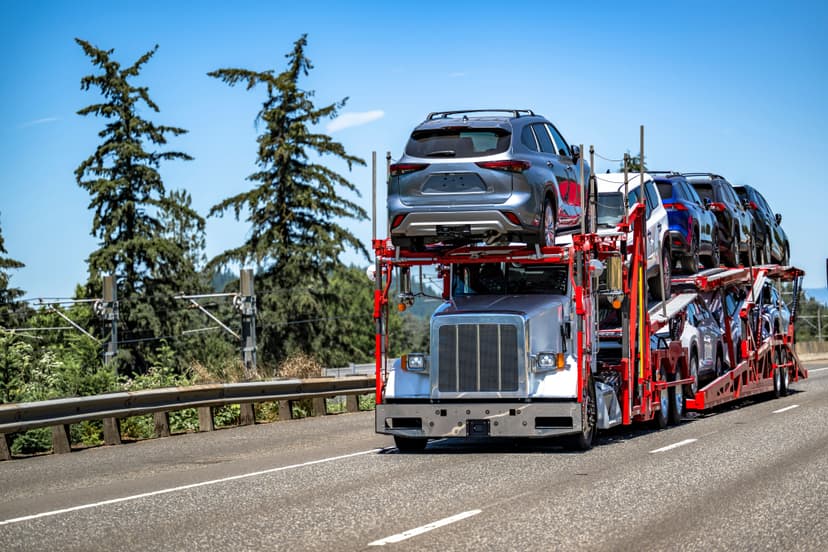
Keep New York pickup areas accessible during winter.
Coordinate California receiving arrangements before departure.
Allow scheduling flexibility when severe storms or highway restrictions affect the transportation route.

Factor |  Haulify-ing It! | Driving It Yourself |
|---|---|---|
Your Time | Vehicle moves separately from your personal travel | You complete the interstate drive |
Vehicle mileage | Avoids adding the full road-trip mileage | Adds the road-trip mileage |
Trip expenses | Transportation is reflected in your quote | Fuel, meals, tolls, and possible lodging |
Convenience | Haulify coordinates transportation; the assigned carrier performs the move | You manage weather, traffic, stops, and the full drive |
"Moving out of a New York City apartment? Don't schedule your car pickup and moving-truck loading for the same crowded curbside space. Coordinate a separate, truck-accessible handoff location so both moves have room to happen safely! "

As of November 2026, the illustrative cost to ship a standard operable sedan from New York City to Los Angeles is approximately $1,562–$2,287 using open auto transport for a 2,789-mile route. Across the four representative routes shown here, calculated estimates range from approximately $1,474 to $2,324. These figures use Haulify's approved per-mile pricing methodology rather than observed carrier averages. Actual prices depend on the exact locations, vehicle details, transport method, scheduling, and carrier availability.
The representative New York-to-California routes shown here have an estimated 6–10 days in transit after pickup. This estimate does not include carrier assignment or pickup scheduling. Actual transportation time may vary with carrier stops, route selection, road conditions, and operational requirements.
Pickup may be arranged in New York City, but the requested street must be accessible to the carrier's particular truck and trailer. Commercial truck routes, parkway restrictions, parking regulations, and limited space can prevent direct loading at certain addresses.
Some large trailers face additional legal restrictions within the five boroughs. If direct access is unavailable, the carrier may coordinate a nearby safe and legally accessible meeting location.
Yes. Buffalo and Rochester connect with western New York's I-90 corridor, while New York City presents different metropolitan highway connections and commercial truck restrictions.
Mileage, carrier positioning, and pickup access can differ between the two regions. The actual origin ZIP code and destination determine the applicable transportation arrangements.
Yes. Los Angeles and San Diego are served by different regional highways than San Francisco, Sacramento, and other Northern California destinations.
These differences influence mileage, the carrier's final approach, and delivery access. Coastal communities, mountain towns, and destinations away from major interstates may require additional planning.
Yes. Winter storms can affect pickup in New York and portions of the cross-country route. Western mountain passes, including California's I-80 corridor over Donner Pass, may also experience snow, chain restrictions, or temporary closures.
The impact depends on actual weather conditions and the carrier's chosen route. Winter does not automatically mean a shipment will be delayed.
w.haulify.com/enclosed-auto-transport/">Enclosed auto transport provides additional shielding from outside weather and road debris and may be preferable for classic, luxury, restored, or specialty vehicles.
The appropriate option depends on the vehicle, desired protection, and transportation budget.
Yes. Customers can arrange transportation separately from their personal travel, provided pickup and receiving arrangements are established.
An authorized person may be able to release or receive the vehicle on the customer's behalf. Confirm the California receiving contact, delivery location, and availability before scheduling.
Because the transit window is an estimate rather than a guaranteed delivery date, customers should allow appropriate scheduling flexibility.