


What a great company had to move car from New Jersey to Florida was skeptical about some other quotes that I received. This was no nonsense delivered the car early and for the price that they told me.
Richard Durgin
October 28, 2026



Moving a car from California to Texas? A Los Angeles release to Dallas can be planned differently from a San Francisco release to Houston.
Don’t Drive It. Haulify It.
California-to-Texas pricing depends on which coast or inland region supplies the vehicle and where in Texas it is headed. San Francisco to Houston is not interchangeable with San Diego to San Antonio. Our four representative city pairs span approximately 1,275 to 1,926 road miles, with a transit-planning range of 3–7 days after carrier pickup, depending on carrier assignment and actual itinerary. Haulify is the broker arranging the shipment with an assigned motor carrier, rather than operating the truck itself. Browse California car shipping and Texas car shipping for state-specific planning.
California-to-Texas pricing depends on which coast or inland region supplies the vehicle and where in Texas it is headed. San Francisco to Houston is not interchangeable with San Diego to San Antonio. The carrier must evaluate the two real addresses and any detour from its operating route. A nearby safe meeting point can sometimes make loading or delivery easier.
Summer relocations and school-year transitions can concentrate requests in major metros. California wildfire smoke, regional road closures and occasional higher-elevation weather can affect segments of a carrier’s route; Texas heat and thunderstorms create separate delivery considerations. No seasonal surcharge or discount is assumed in the sample calculations. Pricing should be checked against current carrier offers.
The examples assume a standard, running sedan. SUVs, large pickups and inoperable vehicles can require more space or specialized loading. Open car transport is generally the more economical choice; enclosed auto transport can be considered for greater shielding from ordinary road exposure.
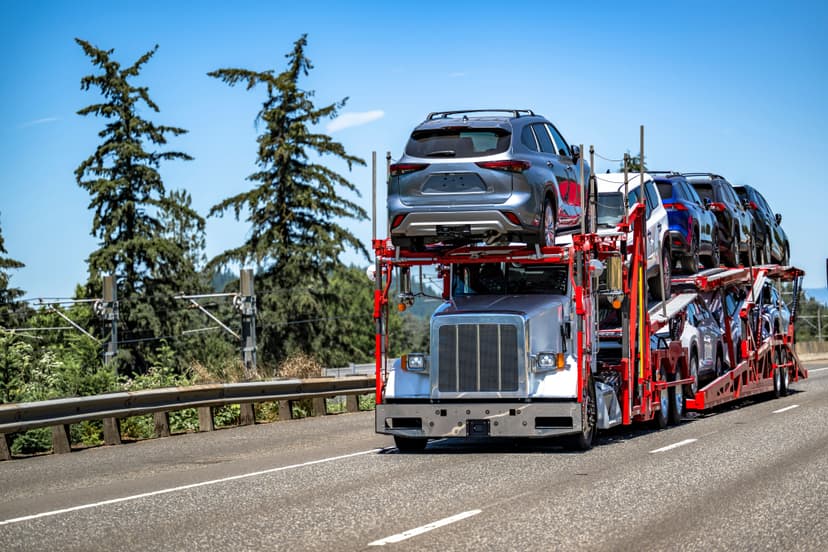
Open car transport is commonly used for everyday vehicles on California to Texas routes and is generally the more economical option. Enclosed auto transport provides additional protection from ordinary road and weather exposure and may suit a classic, collectible, luxury, or specialty vehicle. The planning prices shown on this page are for open transport.
Providing an accurate ready date and some scheduling flexibility may help carrier matching, but it does not guarantee pickup on a selected day or a lower price. California pickups range from dense Los Angeles blocks and San Francisco hills to suburban Sacramento and San Diego. The transporter may need a safer commercial or open parking location instead of the exact residence.
These are mathematical planning ranges using Haulify’s approved distance tiers, not a sample of completed customer orders or a real-time carrier rate. The quote must reflect the actual vehicle, endpoints, season, equipment and dispatch availability. See the car shipping cost guide for broader factors.
What a great company had to move car from New Jersey to Florida was skeptical about some other quotes that I received. This was no nonsense delivered the car early and for the price that they told me.
Pick this company if you want your car transported correctly and for the price they quoted for! Awesome driver and company, got my car picked up on schedule and dropped off on schedule, will definitely be using again for all my car transport needs !
There was clear and concise communication throughout the shipping process. I appreciated working with Haulify and Darius because the quote given did not change and the driver assignment was quick, on time and easy. I recommend this company above others. (I have shipped my car several times to other states using different services.) My experience has never been this seamless so I will be using Haulify again!
Great communication. I felt secure as they transported my car, I truly feel confident in them. I recommend using this company, the quoted price doesn’t change and they work with you within the outlined timeframe.
We had to have three cars hauled with a little bit of a short notice on scheduling but Darius got us sorted out for a fair cost, without any problems, and our cars showed up just how they left and when they said they would. I never shipped a car before and the process with Haulify and the skilled assistance of Darius made it pretty easy. I would definitely use Haulify again.
I highly recommend them! They're excellent, and I'll never work with any other company again. They fully deserve what they charge.
Awesome service and transparent. I appreciate the prompt response
Excellent communication!
True Professionals here, they gave me a price and a timeline and stuck to it...It's very rare these days with these type of services...I'd use Haulify again in a second and recommend them to anyone considering moving their vehicles.
Fast service
I am a repeat customer of Haulify and cannot recommend them highly enough!!! Both times I used Haulify to transport my vehicles cross country, and both times I was so impressed. Not only was the process timely (and both times my vehicle arrived precisely on time), but the communication throughout the process was impeccable. I will never use another company to transport my vehicles ever again, and I look forward to giving Haulify my business in the future when the need arises. Hands down the best out there!
Haulify was unreal from start to finish. I shipped a vehicle from San Diego to Chicago, and the entire process was smooth, transparent, and stress-free. Their communication was top-tier — constant updates, quick responses, and zero guesswork at any point. They did exactly what they said they would do, when they said they'd do it, which is rare in vehicle transport. Pickup and delivery were on time, the car arrived in perfect condition, and the execution overall was extremely professional. You can tell they actually care about doing things the right way, not just moving cars. If you're looking for a company that combines excellent communication, reliability, and flawless execution, Haulify is it.
I give haulify an A+. They were awesome to work with and everything went very smoothly. Very good communication. I'd recommend them in a heartbeat
Thank you so much Darius was s amazing with helping me process everything, replied to every call or text and. Kept me informed I have received my truck just yet but I will def be packing for part two. This guy is always at work never missed a call ❤️
Without question this is the best company I've ever worked with when it comes to relocating a vehicle. The customer service was immaculate making the drop off/pick up of my vehicle seamless. I have to travel a bit, from time to time, and utilizing my own vehicle makes the most sense so I will 100% be using their services again. Highly recommend.
Fast reliable service & on time. Thank you for the great service & customer service.
WEST COAST ORIGINS TO TEXAS MARKETS
Why People Ship Cars From California to Texas
California to Texas Car Shipping can involve several customer needs. These four scenarios show where pickup readiness, receiving arrangements and destination access deserve attention.
California to Texas relocations
Arrange pickup after you have finished using the vehicle, not simply on the day household movers arrive.
Vehicles from Northern California
San Francisco and Sacramento origins can involve longer positioning than southern California pickup hubs.
Texas student and family moves
Coordinate the Texas recipient and preferred availability date around campus access and move-in activity.
Collector or high-value vehicles
Consider whether enclosed transport and a documented condition inspection better fit the vehicle.

Confirm the California vehicle-release contact and suitable pickup location.
Give the Texas delivery ZIP code and the recipient’s access information.
Plan your personal relocation separately from carrier pickup and transit.

Factor |  Haulify-ing It! | Driving It Yourself |
|---|---|---|
Your Time | Carrier transit after pickup, while you travel separately. | You drive the full route and plan every rest stop. |
Vehicle mileage | Avoid adding the representative interstate mileage to the car being shipped. | Add about 1,436 miles for the Los Angeles, CA to Dallas, TX example. |
Trip expenses | Planning estimate $919–$1,321 for one running sedan on open transport. | Pay for fuel, food, lodging if needed, tolls and vehicle wear. |
Convenience | Pickup, transport, and delivery are coordinated | You manage weather, traffic, stops, and the full drive |
"Moving from California to Texas? Your moving truck and auto carrier may not arrive on the same day. Before pickup, confirm who will release your vehicle in California and who will meet the driver in Texas. A little coordination upfront can make delivery day much easier. "

Answer: For one standard running sedan on open transport, Los Angeles, CA to Dallas, TX is about 1,436 miles and has a formula-based estimate of $919–$1,321. Another example, San Francisco, CA to Houston, TX, is roughly 1,926 miles with a planning range of $1,136–$1,522. These are not live quotes or historical customer averages.
Across the four representative routes, plan for approximately 3–7 days in transit after pickup. For Los Angeles, CA to Dallas, TX, the example is 3–6 days. Carrier assignment and pickup scheduling occur before the clock starts.
The listed city pairs vary from approximately 1,275 to 1,926 road miles. A single statewide number would be misleading. Actual routes and carrier stops may differ from city-center mileage references.
Summer relocations and school-year transitions can concentrate requests in major metros. California wildfire smoke, regional road closures and occasional higher-elevation weather can affect segments of a carrier’s route; Texas heat and thunderstorms create separate delivery considerations. There is no verified cheapest week for all shipments; current availability and pricing should determine the booking choice.
Not always. Urban access, hills, traffic restrictions and carrier positioning can differ. Discuss a safe loading point for the actual street.
Yes. Dallas, Austin, San Antonio and Houston are far apart, and a carrier may use different interstate combinations to reach them.
Enclosed transport can offer additional shielding from ordinary road exposure. Availability and pricing depend on the equipment and vehicle; obtain a specific quote.
Tell Haulify about building or street rules before dispatch. A legal meeting point nearby can reduce the chance of a failed pickup.
Open transport is a common cost-conscious choice for everyday cars. Enclosed auto transport adds shielding from ordinary road exposure and may be worth pricing for a classic or high-value vehicle. Compare actual quotes before booking.
Haulify can coordinate door-to-door car shipping when both locations can safely and legally accommodate the carrier. If not, the driver can coordinate a suitable nearby meeting location. Dallas-Fort Worth, Houston, Austin and San Antonio are distinct Texas destinations. Be clear about whether the driver is delivering into a central city, an outlying suburb or a restricted apartment community.