9 Factors That Affect Car Shipping Costs

Hauly Explains: What Affects Car Shipping Costs?
Shipping a car is one of the easiest ways to move your vehicle without adding unnecessary miles, planning a long road trip, or dealing with the stress of driving across states.
But one of the first questions most people ask is:
“How much does it cost to ship a car?”
The honest answer? It depends.
And I know that answer can feel frustrating at first. But after hauling vehicles across busy interstates, seasonal snowbird routes, tight neighborhoods, rural roads, and long-distance lanes, I can tell you this: car shipping prices are not random. They are based on real details that affect how safely, efficiently, and smoothly a vehicle can be moved.
At Haulify, we believe car shipping should feel clear, safe, and easy to understand. That’s why I’m breaking down the 9 biggest factors that affect car shipping costs, so you know what impacts your quote before you book.
If you’re completely new to the process, we have simplified it in 3 easy steps!.
Quick Answer: What Affects Car Shipping Costs?
Car shipping costs are influenced by several factors, including distance, route demand, vehicle size and weight, season and timing, open or enclosed transport, vehicle condition, pickup and delivery flexibility, location access, fuel prices, and carrier availability.
Because auto transport pricing can shift with market conditions, the most accurate way to price your shipment is to request a current quote based on your exact route, vehicle type, pickup window, and delivery needs. The more accurate your shipment details are, the more accurate your quote will be.
What Determines the Cost to Ship a Car?
Car shipping costs are not one-size-fits-all. Every shipment is different because every vehicle, route, pickup window, and delivery location comes with its own set of logistical details.
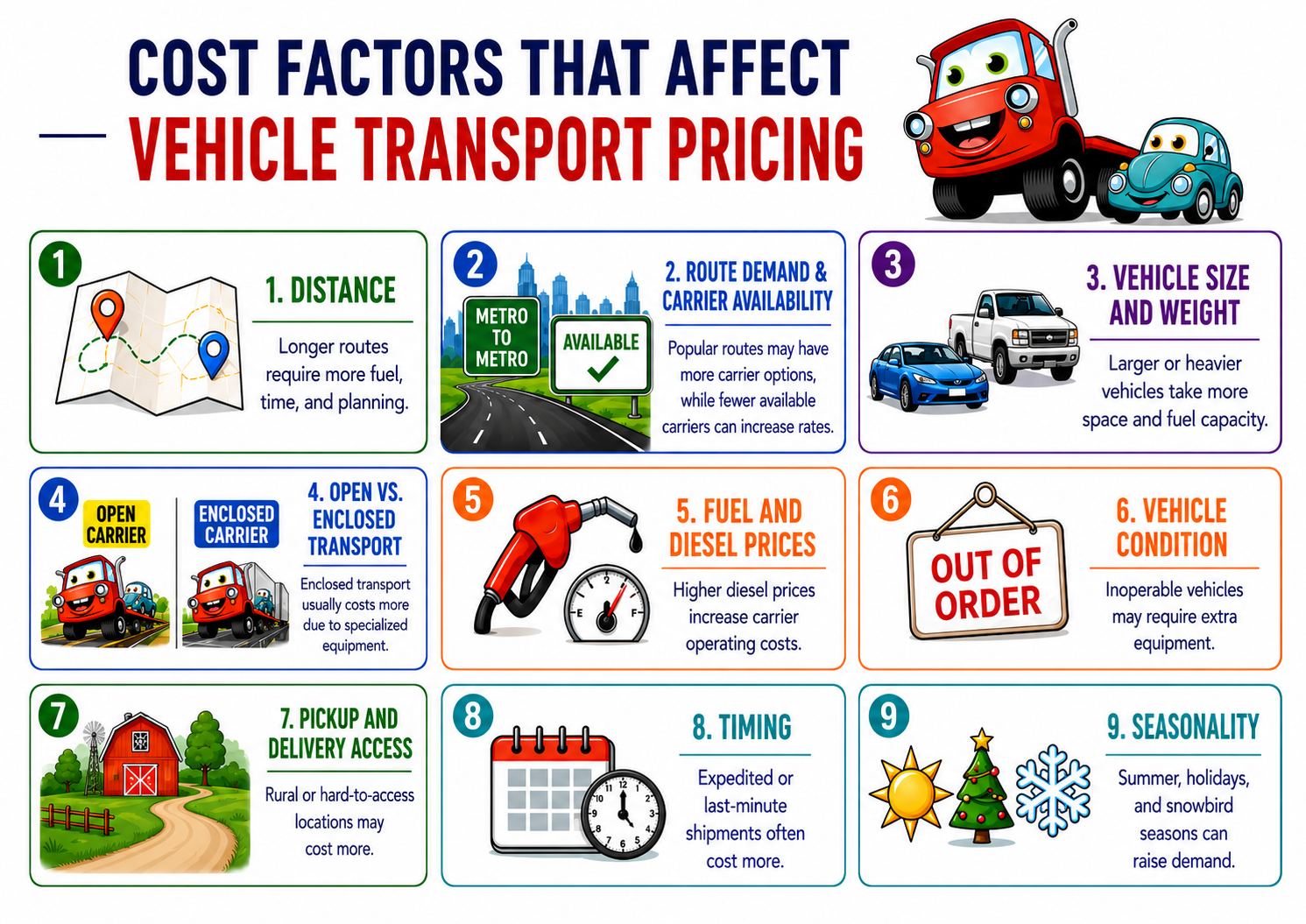
Here is how those 9 core factors shape your final quote:
1. Distance: Longer Trips Cost More Overall, But Often Less Per Mile
Distance is one of the biggest factors in car shipping pricing. In general, the farther your vehicle needs to travel, the higher the total shipment cost will be.
However, from the carrier’s perspective, distance is not just about total miles on a map. It also involves fuel, driver hours, equipment use, tolls, route planning, and how efficiently a vehicle fits into the truck’s full transport schedule.
Longer routes may also cost less per mile because carriers can often plan more efficiently over a longer stretch of highway.
For example, shipping a car from Michigan to Florida will usually cost more overall than shipping from Detroit to Chicago, but the cost per mile may be lower on the longer route if that lane has stronger carrier availability.
If you’re planning a longer move, our Cross-Country Car Shipping guide can help you understand what goes into long-distance auto transport.
Behind the Wheel
I do not just look at how far a vehicle is going. I look at how efficiently the route can be planned, how much fuel and time it takes, and whether the lane is active enough to keep the shipment moving smoothly.
2. Route Demand & Carrier Availability: Popular Interstate Lanes Can Be More Cost-Efficient
Your specific route matters just as much as your total mileage.
Popular city-to-city and state-to-state corridors often have more carrier availability. When more carriers are already traveling that lane, it can be easier to match your shipment with a truck and more cost-efficient.
Common high-volume auto transport routes may include:
- Florida to Michigan, and Michigan to Florida
- New York to Florida
- California to Texas
- Illinois to Arizona
- California to New York
Remote or rural routes may cost more because carriers may need to drive out of their way for pickup or delivery. A shipment traveling between two major metro areas is often easier to coordinate than a shipment between two small towns far from a major highways.
For example, a shipment from Miami, Florida to Detroit, Michigan may be easier to match during snowbird season than a pickup from a small rural town far from the interstate. That does not mean every popular route is automatically cheap, but active lanes often give transport teams more carrier options to work with.
Carrier availability also matters. If many trucks are available on a route, pricing may be more competitive. If fewer carriers are available, especially during peak seasons or on less common routes, the cost may increase.
This is where planning matters. A route with steady carrier movement can create more opportunities for efficient scheduling, while a less common lane may require extra time or mileage to coordinate.
The Route Report
Active routes are like smoother highways for planning. When carriers are already moving through a lane, it is usually easier to build an efficient load. Remote routes can still be handled safely, but they often need more planning, time, and coordination.
3. Vehicle Size and Weight: Space on the Carrier Matters
The size and weight of your vehicle can affect the cost to ship it.
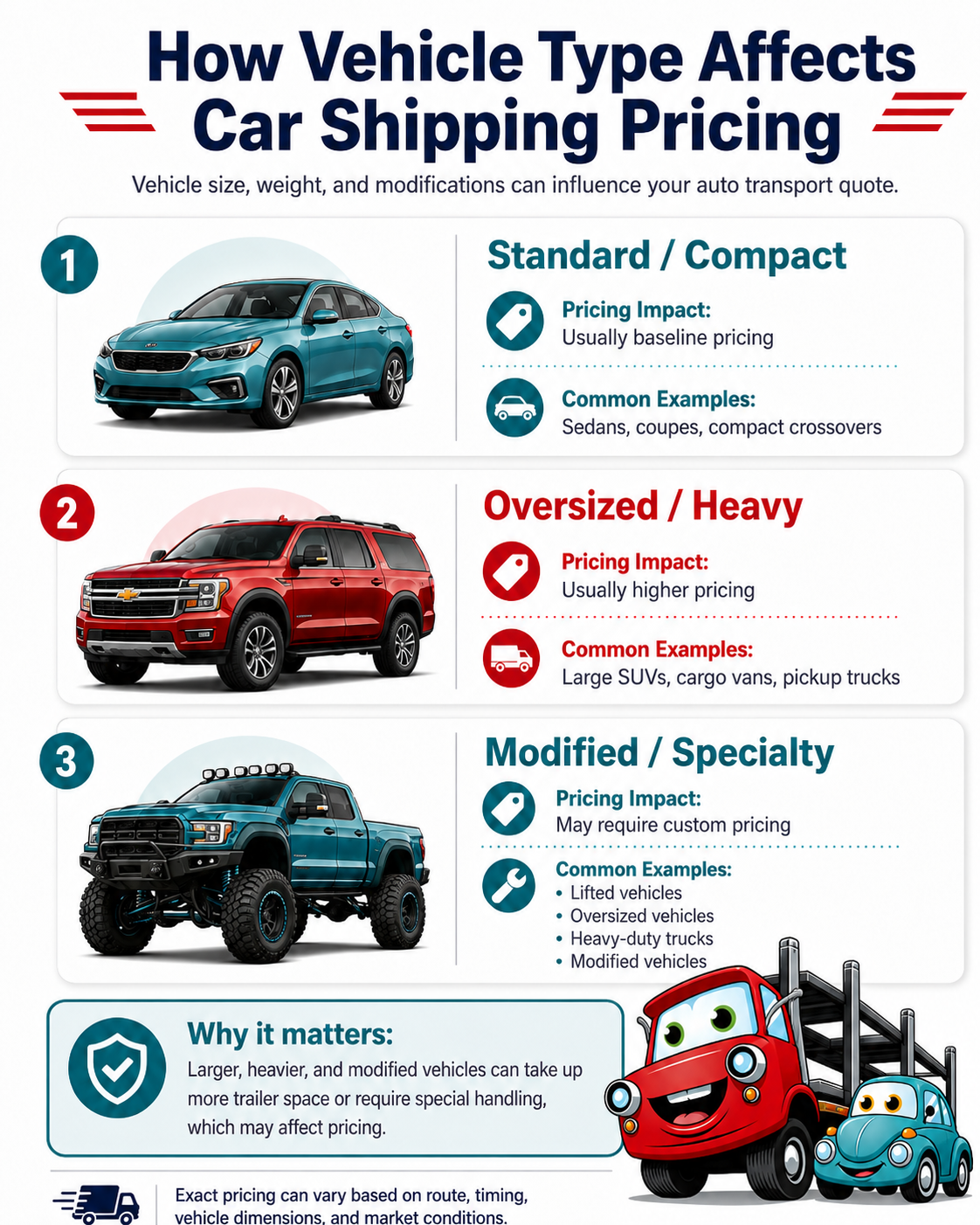
Auto transport carriers have legal weight limits and physical space limits. A compact sedan usually takes up less room and weighs less than a full-size SUV, heavy-duty pickup, cargo van, or modified vehicle.
When a carrier loads a larger or heavier vehicle, it can affect how the rest of the trailer is arranged. In some cases, one oversized vehicle may reduce the number of vehicles a carrier can safely haul on that trip.
Hauly’s Reality Check
I am not just carrying one vehicle; I am balancing a full load. Size, weight, height, and modifications all matter because they affect spacing, loading, safety, and how the entire carrier is planned.
4. Season and Timing: Demand Can Change Throughout the Year
Car shipping prices can shift throughout the year based on supply, demand, and carrier availability.
Certain seasons create busier shipping periods. When many people are trying to move vehicles at the same time, carrier availability can tighten and prices may increase.
Busy shipping windows often include:
- Spring: Snowbirds returning to northern states
- Summer: Family relocations and military PCS moves
- Late summer and fall: College move-in and move-out periods
- Holidays: Tighter carrier schedules and limited pickup windows
For example, snowbird routes between Florida and northern states can become busier during seasonal migration windows. When demand rises pricing may increase; it becomes more important to book early and stay flexible.
If you are a seasonal resident planning an annual move, our Snowbird Car Shipping guide can help you understand how timing affects popular north-south routes.
Seasonal Observation
I see demand change with the seasons. When more people need vehicles moved at the same time, the best carrier spots can fill quickly. Booking earlier gives your shipment more room to be planned the right way.
5. Transport Type: Open vs. Enclosed Auto Transport
The type of transport you choose plays a major role in your quote.
Open Auto Transport
Open auto transport is the most common and usually the more affordable option. Your vehicle is transported on an open carrier, similar to the trucks you often see delivering cars to dealerships.
Open transport is a smart choice for many everyday vehicles, including sedans, SUVs, pickup trucks, family vehicles, dealer purchases, and standard relocations.
Enclosed Auto Transport
Enclosed auto transport usually costs more because your vehicle travels inside a covered trailer. These trailers are more specialized, often carry fewer vehicles, and provide added protection from weather, road debris, and outside exposure.
Enclosed transport is often recommended for classic cars, luxury vehicles, exotic cars, collector vehicles, high-value vehicles, and custom vehicles.
You can compare both options in our dedicated Open vs. Enclosed Auto Transport guide.
6. Vehicle Condition: Running vs. Non-Running Vehicles
A vehicle that starts, steers, rolls, and brakes properly is usually easier and more affordable to transport.
If your vehicle is non-running, also called inoperable or “inop,” the transport process changes. The carrier may need a winch, extra loading time, special equipment, or additional coordination to load and unload the vehicle safely.
Before booking your shipment, it is important to be honest about your car’s condition. If a carrier arrives expecting a running vehicle and discovers it has a dead battery, frozen brakes, missing keys, or cannot roll, the shipment may be delayed or repriced.
From the Dispatch Desk
This is one detail you do not want to guess on. If a vehicle will not start, steer, roll, or brake, saying so upfront helps avoid pickup delays and makes sure the right equipment is ready.
7. Pickup and Delivery Flexibility: Time Is Part of the Quote
Timing plays a big role in auto transport pricing.
If you need an immediate next-day pickup or have a strict delivery deadline, your shipment may require expedited coordination. That usually costs more because the carrier has less flexibility to fit your vehicle into an existing route.
On the other hand, flexible pickup windows often make it easier to find a strong carrier match at a more competitive rate.
For example, saying, “I can ship any day next week,” gives the transport team more room to match your vehicle with the right carrier. Saying, “It must be picked up tomorrow morning,” narrows the options.
The Scheduling Secret
Flexibility helps carriers build smarter routes. A standard pickup window gives your transport coordinator more room to find the right truck, the right lane, and the right timing without relying on rush pricing.
8. Location Access: Is Your Street Carrier-Friendly?
Auto transport trucks are large. They need room to maneuver, load, unload, and safely stop. If your pickup or delivery address is on a narrow street, in a tight neighborhood, under low-hanging trees, or inside a restricted area, the carrier may need to meet you nearby.
Hard-to-access locations may include:
- Narrow residential streets
- Areas with low bridges or tree clearance
- Gated communities with commercial vehicle restrictions
- Steep mountain roads or unpaved rural roads
- Busy downtown areas with limited stopping space
- Apartment complexes with restricted loading areas
Door-to-door auto transport is designed to get as close to your pickup and delivery locations as safely and legally possible. To see how these real-world handoffs work, read our guide on [Door-to-Door Auto Transport].
On-the-Ground Reality
A safe pickup is about more than the address. If a large carrier cannot safely navigate your neighborhood, meeting at a nearby open parking lot, retail center, or accessible main road can save time and protect your vehicle.
9. Fuel Costs and Carrier Availability: Market Conditions Matter
Fuel is one of the major operating costs for commercial carriers. Because car haulers move heavy equipment over long distances, diesel prices can influence transport rates.
When fuel costs rise, carriers may need to account for those added operating expenses.
Market Watch
Fuel is not the whole quote, but it is part of the road ahead. Long-distance hauling takes fuel, driver time, equipment, routing, and careful scheduling, and all of that plays into a realistic transport price.
Is the Cheapest Car Shipping Quote Always the Best?
Not always.
A very low quote may look appealing, but it may not reflect the current carrier market. If a quote is priced too low, it can take longer to assign a carrier or lead to unexpected price changes later.
A reliable auto transport quote should feel realistic, clear, and transparent.
When evaluating quotes, look for:
- A clear breakdown of services
- Open or enclosed transport details
- Pickup and delivery expectations
- Carrier coordination support
- Honest pricing explanation
- Professional communication
- No confusing promises or vague guarantees
Car shipping is about more than moving a vehicle from point A to point B. It is about protecting your time, your vehicle, and your peace of mind.
Hauly’s Take
The cheapest quote is not always the safest or most reliable choice. A trustworthy quote should make sense for the route, the timing, the vehicle, and the level of service you expect.
How to Save Money on Car Shipping
While you cannot control fuel prices, weather, or seasonal demand, you can control how prepared and flexible you are when booking.
Here are some smart ways to keep your car shipping quote more manageable:
- Book early when possible: Try to schedule your transport early so your coordinator has more options.
- Be flexible with pickup dates: A wider pickup window can help avoid rush pricing.
- Choose open transport for standard vehicles: For many everyday cars, open transport offers the best value.
- Use accessible pickup and delivery locations: Meeting near a major road or open parking area may help if your address is difficult to access.
- Provide accurate vehicle details: List modifications, oversized tires, roof racks, lift kits, or vehicle condition issues upfront.
- Compare value, not just price: The right quote should balance cost, timing, communication, and service reliability.
Helpful Resources Before You Book
Planning a successful shipment means looking at the full picture, not just the final quote. These guides can help you understand your options, prepare your vehicle, and avoid common pickup-day issues:
- The Do’s and Don’ts of Auto Transport — Essential vehicle prep steps to take before your carrier arrives.
- Door-to-Door Auto Transport — Learn how pickup and delivery work when large carriers need safe access.
- Ship a Car to Another State — A step-by-step roadmap for interstate relocations.
FAQ: Car Shipping Cost Factors
What is the biggest factor in car shipping costs?
Distance is usually one of the biggest factors, but it is not the only one. Route demand, vehicle size, transport type, timing, pickup location, fuel costs, and carrier availability also play major roles.
Why does enclosed auto transport cost more?
Enclosed transport usually costs more because it uses specialized trailers, carries fewer vehicles, and provides added protection from weather, dirt, and road debris.
Does the size of my car affect shipping cost?
Yes. Larger and heavier vehicles usually cost more because they take up more carrier space and add more weight to the truck.
Is it cheaper to ship a running vehicle?
Usually, yes. A running vehicle is easier to load and unload. Non-running vehicles may require a winch, extra labor, or special carrier approval, which can increase the cost.
Can flexible pickup dates lower my price?
Flexible dates can improve carrier options, which may help you get a better rate. Strict or urgent pickup windows usually reduce flexibility and may cost more.
Do rural locations cost more for car shipping?
They can. Rural or hard-to-access locations may require extra carrier time or mileage. Meeting near a major road, open parking lot, or accessible location may help.
Is open transport cheaper than enclosed transport?
Yes. Open transport is usually more affordable and is the most common option for everyday vehicles. Enclosed transport typically costs more because it provides added protection and uses more specialized equipment.
Why do car shipping prices change by season?
Prices can change when demand rises. Busy moving seasons, snowbird routes, college moves, holiday periods, and military PCS season can all affect carrier availability and pricing.
Do fuel prices affect car shipping quotes?
Yes. Fuel prices can influence auto transport quotes because carriers must account for the cost of moving heavy equipment over long distances. Fuel is not the only pricing factor, but it is an important one.
Can dropping off my car near a major city lower my price?
Sometimes, yes. Meeting a carrier near a major interstate corridor, metro area, or accessible pickup point may reduce off-route time and make the shipment easier to coordinate.
Final Word from Hauly
After hauling vehicles through busy cities, open highways, seasonal routes, rural roads, and tight pickup locations, I can tell you this: car shipping costs are shaped by much more than mileage.
Distance, route demand, vehicle size, season, transport type, vehicle condition, flexibility, location access, fuel costs, and carrier availability all help determine your final price.
The good news? Once you understand these factors, it becomes much easier to plan your shipment with confidence.
Whether you’re moving, buying a vehicle online, sending a car to family, or heading between seasonal homes, Haulify helps make auto transport safe, simple, and easier to understand.
Skip the miles and let us handle the heavy lifting.
Don’t Drive It. Haulify It.

Simple and Reliable
Nationwide Car Shipping
Don’t Drive It. Haulify It!
Nation’s Best Choice for Auto Transport
Get a Quote